
Last updated September 25, 2026
Seasonal ADU Care for Irvine: Year-Round Homeowner’s Guide
Irvine averages fewer than 30 rainy days per year. That mildness is exactly why drainage systems go untested for 11 months at a stretch, debris accumulates in gutters and area drains without the seasonal flushing that happens naturally in wetter climates, and the first hard rain of the season becomes a stress test your drainage either passes or fails. We’ve inspected ADUs in Irvine where a three-year-old unit, built to permit and signed off by the city, showed water intrusion at the sill plate because a downspout had been clogged since month two. This guide builds a maintenance calendar around Irvine’s actual weather patterns, not a generic four-season template, and complements our ADU Design & Permitting Maintenance Checklist for Irvine Homeowners. You’ll learn what to check, when the timing matters for our specific climate, and how to read your permit documents to know which maintenance intervals apply to your unit.
Quick Answer
ADU maintenance in Irvine should follow a four-point seasonal calendar: pre-rain drainage inspection in October-November, post-rain confirmation and HVAC filter replacement in January-February, exterior paint and caulk inspection in April-May before UV intensity peaks, and mini-split refrigerant and attic vent checks in July-August ahead of heat events. The specific components your ADU was built with, documented in your permit set, determine which intervals and specifications apply; for permit guidance, see ADU Permits, Codes & Inspections in CA: What You Need to Know.
Table of Contents
- October-November: Pre-Rain Drainage and Weatherstripping
- January-February: Post-Rain Confirmation and HVAC Filter Replacement
- April-May: Exterior Paint, Caulk, and UV Preparation
- July-August: Mini-Split Performance and Attic Vent Clearance
- Reading Your Permit Set: Why Specs Determine Your Maintenance Calendar
- Common Mistakes to Avoid
- When to Call a Professional
- Frequently Asked Questions
October-November: Pre-Rain Drainage and Weatherstripping
The Santa Ana wind season in Irvine typically arrives in October and runs through January. These are dry, high-velocity winds that test every gap in your ADU’s envelope. We’ve found that weatherstripping failures show up first as dust accumulation on interior sills, days or weeks before any temperature discomfort becomes obvious.
Drainage inspection sequence:
- Clear all gutters and downspouts, including any rain chains or scuppers specified in your permit set. In Irvine’s low-rainfall environment, leaves from the previous spring often sit undisturbed until they form a mat.
- Test every downspout termination. Water should discharge at least 6 feet from the foundation or into a city-approved drainage system. In the Woodbridge and Northwood neighborhoods, we’ve seen ADUs where the original grade had settled, creating a reverse slope toward the foundation.
- Inspect area drains, particularly if your ADU has a zero-step entry or patio-level threshold. These drains have small catch basins that trap sediment from Irvine’s dry-season dust.
- Check the weep screed at the base of stucco walls. This perforated metal strip allows moisture to escape the wall cavity. If it’s buried by landscaping or clogged with stucco overspray, water has no exit path.
Weatherstripping and envelope check:
- Door sweeps: verify contact with the threshold across the full width. Santa Ana winds will find any gap.
- Window weatherstripping: compress and release; it should rebound to original shape. Replacement is typically $15-$40 per window for material, if you’re comfortable with the work.
- Exterior caulk at penetrations: hose bibs, electrical conduit, gas lines. Use a silicone-based product rated for UV exposure, not painter’s caulk.
In the New Detached ADU in Irvine projects we’ve completed, we specify a drainage inspection as part of the documented photo record at final walkthrough. If you inherited your ADU from a previous owner, you may not have that record. The city’s building permit file, available through Irvine’s Community Development Department, contains the original drainage plan.
January-February: Post-Rain Confirmation and HVAC Filter Replacement
Irvine’s peak heating use occurs in January and February, when overnight lows dip into the 40s and residents run mini-splits or wall heaters consistently. This is also when the first significant rains typically arrive, making it the ideal window to confirm that your October-November drainage work held up.
Post-rain confirmation checklist:
- Inspect the interior of the ADU at all window and door headers, and at the base of exterior walls. Look for discoloration, efflorescence (a white, powdery mineral deposit), or any softening of drywall.
- Check the crawl space or raised floor cavity if your ADU has one. In the Turtle Rock and University Park areas, where some lots have gentle slopes, we’ve found that surface water can migrate under a raised floor even when the foundation itself is properly drained.
- Verify that gutters and downspouts handled the flow without overflow. Overflow marks on the exterior wall are evidence of a capacity or blockage issue that needs addressing before the next rain.
- Test the area drain flow rate. Pour a bucket of water into the grate; it should clear within seconds. Slow drainage indicates sediment buildup that will worsen.
HVAC filter replacement:
Mini-split systems, the most common HVAC specification in Irvine ADUs, have washable filters that should be cleaned every 30 days during heating season and every 60 days during cooling season. The filter is behind the front panel of the indoor head unit. Rinse with lukewarm water, allow to dry completely, and reinstall. Never run the unit without the filter; the coil will foul with dust from Irvine’s dry air.
If your ADU has a ducted heat pump or gas furnace, the filter is at the return air grille. MERV rating matters: the permit-specified system was designed for a specific pressure drop. Using a higher-MERV filter than specified can reduce airflow and trigger safety limits. The correct filter specification is on the HVAC submittal sheet in your permit set.
For Garage Conversion ADU in Irvine projects, we often specify ductless mini-splits because the existing garage structure rarely accommodates ductwork without compromising ceiling height. The maintenance is simpler, but the filter discipline is more critical because there’s no secondary filtration layer.
April-May: Exterior Paint, Caulk, and UV Preparation
Irvine’s UV intensity peaks in June through August, but the application window for touch-ups closes earlier. Paint and caulk need moderate temperatures to cure correctly. By late May, surface temperatures on south- and west-facing walls can exceed 140°F, which causes rapid skinning and poor adhesion.
Exterior inspection sequence:
- Walk the perimeter during morning light, when surface defects are most visible. Look for chalking (a powdery residue when you rub the surface), cracking, or peeling. These are UV degradation signs, not just cosmetic issues.
- Inspect caulk joints at all material transitions: stucco to trim, trim to window frame, sill to jamb. Failed caulk allows water intrusion during the rare but intense rain events of Irvine’s winter.
- Check fascia and soffit vents for paint overspray or wasp nests. Both block the ventilation flow that keeps attic temperatures within range.
- Evaluate any wood trim for moisture intrusion at end grain. In ADUs with James Hardie fiber-cement siding, this step is reduced but not eliminated; trim pieces are often wood or composite and still require attention.
Touch-up protocol:
Match the original product specification if possible. For stucco, this means the same base and finish coat system, not just a color match. For caulk, use a polyurethane or high-grade silicone compatible with your substrate. In our experience with ADU Design & Permitting in Irvine, the permit set includes a finish schedule that names the paint system. If you don’t have this document, the original builder’s contract or the city’s plan check comments may reference it.
The cost of deferring this work is not immediate. We’ve inspected ADUs in the Quail Hill and Portola Springs areas where caulk failure at a window head went unaddressed for two years, leading to sheathing damage that required $4,000-$7,000 in remediation. The touch-up would have been $200 in materials and a morning’s work.
July-August: Mini-Split Performance and Attic Vent Clearance
Irvine’s heat events, when they occur, are dry and intense. The National Weather Service issues heat advisories when temperatures exceed 100°F, which happens several days each summer. These are the days when an underperforming mini-split or a heat-trapped attic reveals itself.
Mini-split performance check:
- Run the unit in cooling mode and measure the temperature difference between the return air and the supply air. A healthy system shows 15-20°F of drop. Less than 12°F indicates refrigerant charge issues, airflow restriction, or coil fouling.
- Listen for unusual compressor noise from the outdoor unit. Grinding or rattling suggests fan motor bearing wear or debris in the housing.
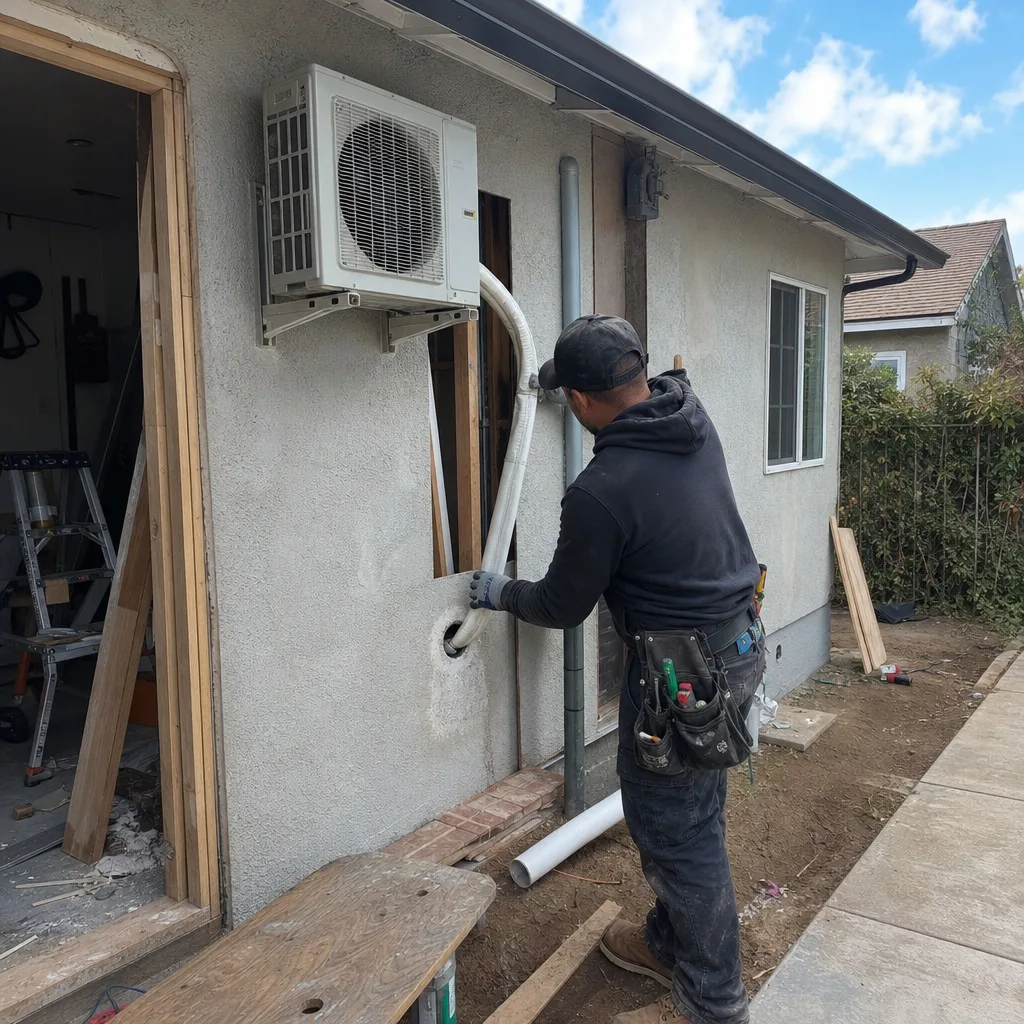
- Confirm that the outdoor unit has 24 inches of clear space on all sides and 60 inches above. We’ve seen ADUs where landscaping grew in, or where a storage item placed in summer reduced airflow and triggered high-pressure shutdowns.
- Check the condensate drain. Even in dry heat, the coil produces water. A clogged drain will trigger an error code or, in some systems, overflow into the wall cavity.
Attic vent clearance:
Irvine’s Title 24 energy code requires specific ventilation ratios based on attic floor area. The permit set specifies the vent type and location: typically ridge vents, soffit vents, or gable vents in combination. Blocked soffit vents are the most common failure we find; insulation installers sometimes push batts into the eave, covering the vent opening.
Attic temperature should not exceed 130°F on a 100°F day. If you have access, a simple infrared thermometer reading at mid-attic height will confirm performance. Sustained temperatures above 150°F degrade shingle life and increase cooling load measurably.
For prefab and modular ADU systems like those from Abodu or Cover, the ventilation is often integrated into the roof assembly at the factory. The maintenance requirement shifts to confirming that the factory-specified clearances are maintained and that no aftermarket modifications have compromised the design. We coordinate these specifications within our single-contract Ellery ADU Studio Irvine home process, so the field verification matches the factory documentation.
Reading Your Permit Set: Why Specs Determine Your Maintenance Calendar
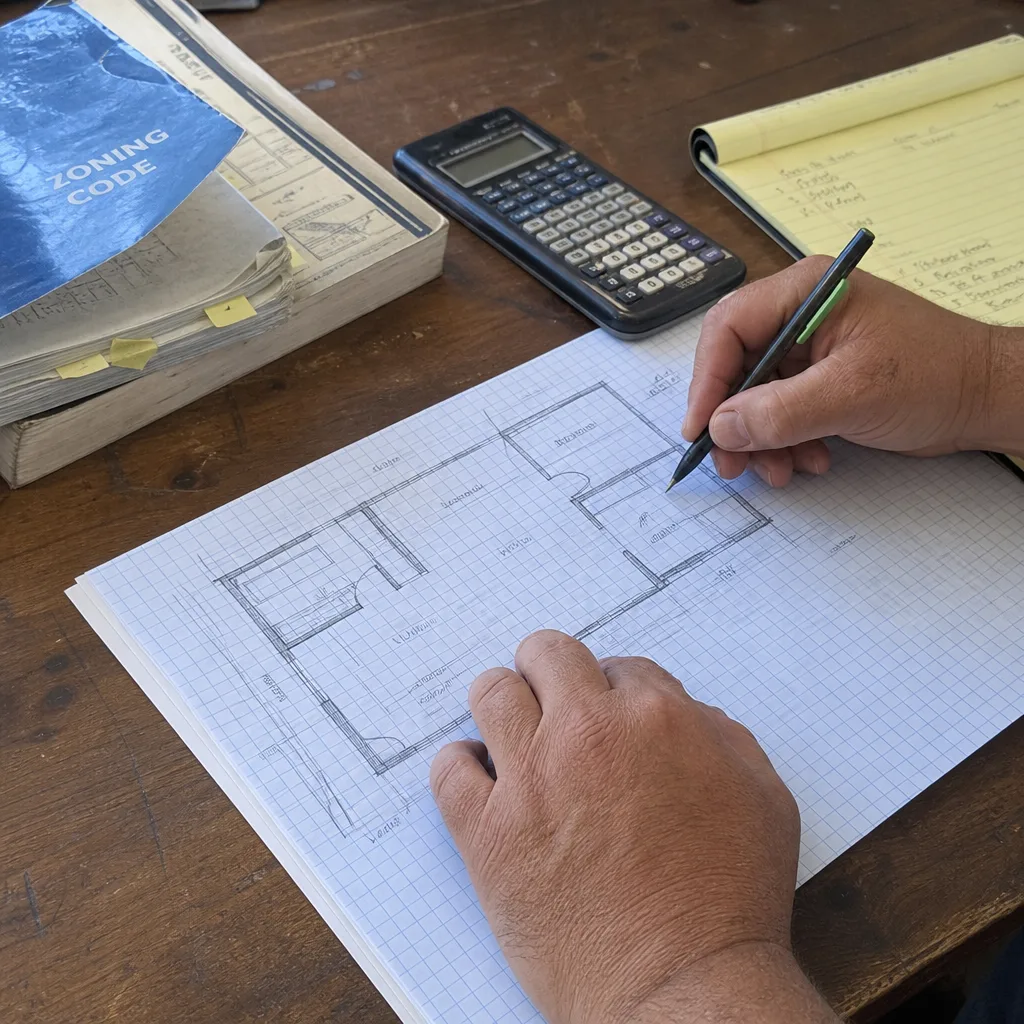
Every ADU in Irvine was built to a permit set that specified components, and those specifications determine what maintenance is required, at what interval, and to what standard. A homeowner who does not know their permit specs is maintaining blind.
Where to find your specifications:
- HVAC model and capacity: The mechanical plan sheet shows the manufacturer, model number, and capacity in BTU/hr. This determines filter type, cleaning interval, and whether your system uses R-410A or the newer R-32 refrigerant.
- Insulation R-value and location: The energy compliance documentation (CF-1R form in California) specifies wall, ceiling, and floor insulation values. This tells you whether attic inspection is critical or secondary.
- Window U-factor and SHGC: The fenestration schedule lists the thermal performance of each window. Lower U-factor means better insulation; lower SHGC means less solar heat gain. These values explain why some rooms run hotter than others and whether window film or shading is appropriate.
- Drainage plan: The site plan shows roof drainage routing, area drain locations, and any dry well or infiltration system. This is your map for the October-November inspection.
- Paint and finish schedule: The architectural sheets specify products by manufacturer and series. This is your reference for April-May touch-ups.
If you did not build the ADU yourself, you may not have the permit set. In Irvine, building permits are public record. You can request a copy from the Community Development Department at City Hall, though there may be a reproduction fee. Alternatively, if you know the original builder, they may provide a copy.
At Ellery ADU Studio Irvine, every client receives a complete permit set at project closeout, bound and indexed, along with the documented photo record. Under Haven Standard Clause 3 (Documented Delivery), this is non-negotiable. If you’re evaluating a used ADU purchase, ask the seller for these documents. Their presence or absence is a useful signal about how the project was managed.
The 365-Day Done Right Promise applies to the build quality, not ongoing maintenance. But the promise does cover any component that fails due to installation defect within the first year. We’ve invoked this for clients in the Orchard Hills area where a condensate drain was improperly sloped at installation, causing a summer overflow that appeared as a maintenance issue but was rooted in construction.
Common Mistakes to Avoid
- Assuming “mild climate” means “no maintenance.” Irvine’s dryness is itself a stressor. Caulk and sealants cure harder and crack faster in low-humidity environments. UV exposure is year-round and intense.
- Cleaning mini-split filters with a pressure washer or compressed air. The fine mesh deforms under pressure. Lukewarm water and gentle agitation only. We’ve replaced filters that were blown out with a garden nozzle, which seemed sensible but destroyed the media.
- Using interior paint on exterior touch-ups. The sheen may match, but the UV resistance and moisture vapor transmission rates differ. Exterior acrylic latex is formulated for the exposure; interior paint will chalk and fail within one season.
- Ignoring the area drain because “it never rains.” In the Westpark and Woodbury neighborhoods, we’ve found area drains completely occluded with landscape debris. The first rain that exceeds the surface infiltration rate floods the patio or entry.
- Deferring caulk repair until “the whole house needs painting.” Caulk failure is a water intrusion path. Two seasons of intrusion can damage sheathing that was sound when the caulk first cracked. The repair escalates from $50 to $5,000.
- Replacing HVAC filters with higher-MERV products without checking system design. The pressure drop across a MERV 13 filter can be triple that of a MERV 8. Your system was designed for a specific range. Exceeding it reduces airflow, increases energy use, and can trigger limit switches.
- Not verifying that a “maintenance-free” product truly is. James Hardie siding is often described as maintenance-free, but the trim, fasteners, and paint system still require inspection. The siding itself won’t rot, but the assembly can fail at the interfaces.
When to Call a Professional
Some conditions indicate that DIY maintenance is no longer sufficient. Call a licensed professional if you find active water intrusion, refrigerant lines that are iced or show oil staining, electrical components that are discolored or emit odor, or structural movement such as cracks in foundations or separating trim joints. These are not maintenance items; they are defects requiring diagnosis.
Ellery ADU Studio Irvine offers free estimates in Irvine for any condition you’re uncertain about. We also provide a Free Second Opinion on any written estimate already in hand, per Haven Standard Clause 7. Call (657) 233-9738 to schedule. A live person answers calls 24/7, and you’ll receive a documented photo record on every visit, not a summary of how we felt about what we saw.
Frequently Asked Questions
Homeowners who perform the calendar in this guide themselves spend $200-$400 annually on materials: filters, caulk, paint touch-up, and basic tools. Professional seasonal inspection services in the Irvine market typically range $300-$600 per visit, with most ADUs requiring two visits per year for comprehensive coverage. Call (657) 233-9738 for an exact quote on professional maintenance; estimates are free and come with a written price before any work begins, per Haven Standard Clause 1.
No. Under Haven Standard Clause 5 (No Surprises), the scope is locked at signing. No door-side upsells, no scope creep. If we find a condition that requires additional work, we document it, provide a separate written quote, and you approve before we proceed. This applies to maintenance visits, repairs, and full construction projects equally.
Routine maintenance, filter replacement, caulking, and painting do not require permits in Irvine. Work that alters structural, mechanical, electrical, or plumbing systems does. If your maintenance reveals a defect that requires component replacement, verify whether the replacement is like-for-like or an upgrade; the latter may trigger permit requirements. We pull all necessary permits as part of any repair scope we undertake.
Check the mechanical plan in your permit set for the design cooling and heating loads, measured in BTU/hr. A properly sized system for Irvine runs nearly continuously at design conditions rather than cycling on and off. Short cycling indicates oversizing, which causes humidity control issues and premature wear. If you don’t have your permit set, a Manual J load calculation can be performed to verify; we include this in our ADU Design & Permitting in Irvine scope for new projects.
Request the permit history from Irvine’s Community Development Department. The address search will return all permits issued, the approved plans, and the inspection record. There may be a fee for reproduction. Alternatively, contact us for a documentation recovery service; we can often reconstruct the specification set from field verification and permit file research.
A thorough seasonal inspection of a standard one-bedroom ADU takes 90-120 minutes. This includes interior and exterior envelope check, HVAC filter service and performance verification, drainage testing, and documentation. Larger units or those with complex site conditions, such as steep lots in the Shady Canyon area, may require additional time. We quote time and price in writing before the visit.
The Bottom Line
Irvine’s mild climate is not a reason to defer ADU maintenance; it’s a reason to be more deliberate about it. The lack of natural flushing means drainage systems accumulate debris. The intense, dry UV exposure degrades sealants faster than humid climates. And the Santa Ana winds test every gap in the envelope that water might find during the rare rain events that do occur. A four-point seasonal calendar, calibrated to actual Irvine conditions and referenced to your permit-specified components, prevents the silent failures that become expensive repairs. Document what you find, act on what you document, and keep the permit set accessible. For more guides & resources, visit our blog. The cost of this discipline is measured in hundreds of dollars per year; the cost of neglect is measured in thousands, typically discovered when you’re preparing to rent or sell the unit.
Written by Nadia Ellery, Owner at Ellery ADU Studio Irvine, serving Irvine since 2015.