
Last updated September 25, 2026
ADU Warning Signs: A Irvine Homeowner’s Reference Guide
An ADU that received a final inspection sticker but was never added to the assessor’s parcel record is not a minor paperwork issue. It is a discrepancy that a title company will flag, a lender will require resolved, and a buyer’s agent will use to renegotiate price. It appears without warning, years after construction. In Irvine, where median home sales now clear $1.3 million and ADUs routinely appraise at $400-$600 per finished square foot, these gaps do not stay small.
This guide teaches Irvine homeowners to read their own permit documents and property records for the warning signs that precede expensive problems, and you can find more guides & resources on our blog. You will learn how to pull your Orange County parcel record, decode permit final cards, spot HOA retroactive review triggers, and identify the three document absences that predict a difficult sale. Every technique here uses free public records and observable conditions, not specialized tools.
Quick Answer
The most expensive ADU problems in Irvine are permitting gaps, not structural failures - a topic covered in depth in The Complete Guide to ADU in Irvine. Warning signs include: your ADU missing from the Orange County Assessor’s parcel record; permit final cards stamped “approved as noted” rather than plain “approved”; door binding or corner stucco cracks on detached units; and missing utility service agreements or HOA approval letters. These surface during sales, refinances, or insurance claims, when resolution is urgent and costly.
Table of Contents
- How to Check Your Orange County Assessor Record for ADU Discrepancies
- How to Read a Permit Final Card: “Approved” vs. “Approved as Noted”
- HOA Violation Warning Signs That Surface Retroactively
- Structural Warning Signs in Irvine’s Clay-Heavy Soil Conditions
- The Three Document Absences That Predict a Difficult Sale
- Prefab and Modular ADU-Specific Warning Signs
- Common Mistakes to Avoid
- When to Call a Professional
- Frequently Asked Questions
How to Check Your Orange County Assessor Record for ADU Discrepancies
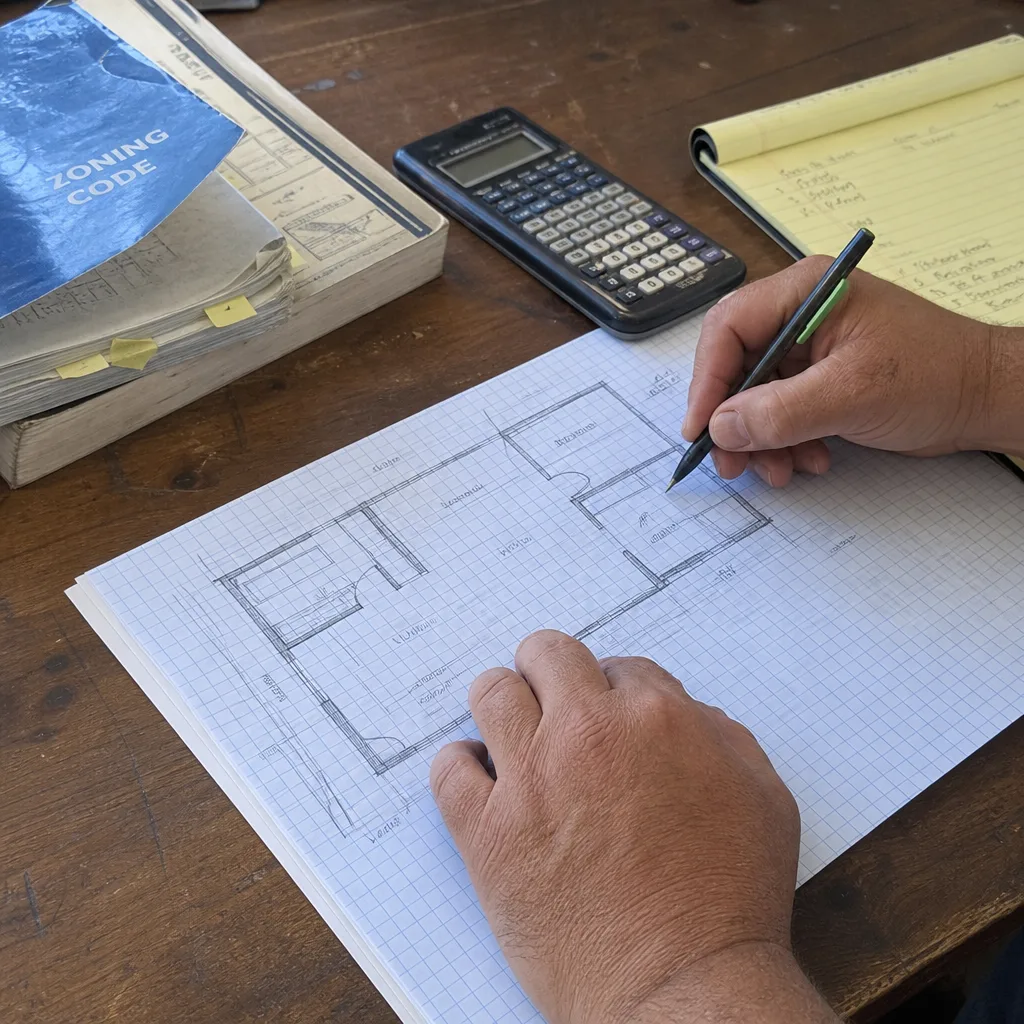
The Orange County Assessor maintains the official parcel record that lenders, title companies, and buyers’ agents consult. An ADU can pass all city inspections yet remain invisible to this record. That gap creates what real estate attorneys call a “cloud on title” - a discrepancy that must be resolved before a sale or refinance can close.
Here is how to pull and read your own record.
- Navigate to ocassessor.com. Select “Property Search,” then enter your address or APN (Assessor’s Parcel Number). The APN appears on your property tax bill; in Irvine, it typically runs 12 digits starting with a tract identifier.
- Open the “Improvements” or “Structures” tab. Look for a line item describing your ADU. It should appear as a separate dwelling unit with its own square footage, year built, and structural type. If your garage conversion or detached unit does not appear here, the assessor has not recorded it.
- Compare square footage. The assessor’s figure should match your permitted plans within 5%. A significant undercount means your ADU’s value is not being captured; an overcount suggests the main house and ADU were merged into one line item, which lenders sometimes treat as unpermitted space.
- Check the “Use Code.” In Irvine, legitimate ADUs carry a residential use code distinct from the main dwelling. A garage still coded as “garage” after conversion, or a detached unit coded as “shed,” signals a recording gap.
Why this matters in practice: we reviewed a parcel in the Woodbridge neighborhood where a 480-square-foot garage conversion ADU, fully permitted and inspected by the city in 2019, remained coded as “2-car garage” in the assessor’s record. The homeowner discovered this only when refinancing in 2023. The lender required a supplemental appraisal, a letter from the city confirming final inspection, and a $1,200 fee to correct the record. Three months of delay.
The correction process involves submitting a Building Record Correction Request to Orange County, attaching the city’s Certificate of Occupancy or final inspection card, and waiting 6-10 weeks for reassessment. During that window, no sale or refinance can proceed cleanly.
If your ADU is missing from the assessor record, the fix is bureaucratic, not structural. But it is not automatic. The city does not notify the assessor; the homeowner or their design-build team must initiate the update. At ADU Design & Permitting in Irvine, we file this paperwork as part of our closeout package, but many contractors treat final inspection as the finish line.
How to Read a Permit Final Card: “Approved” vs. “Approved as Noted”
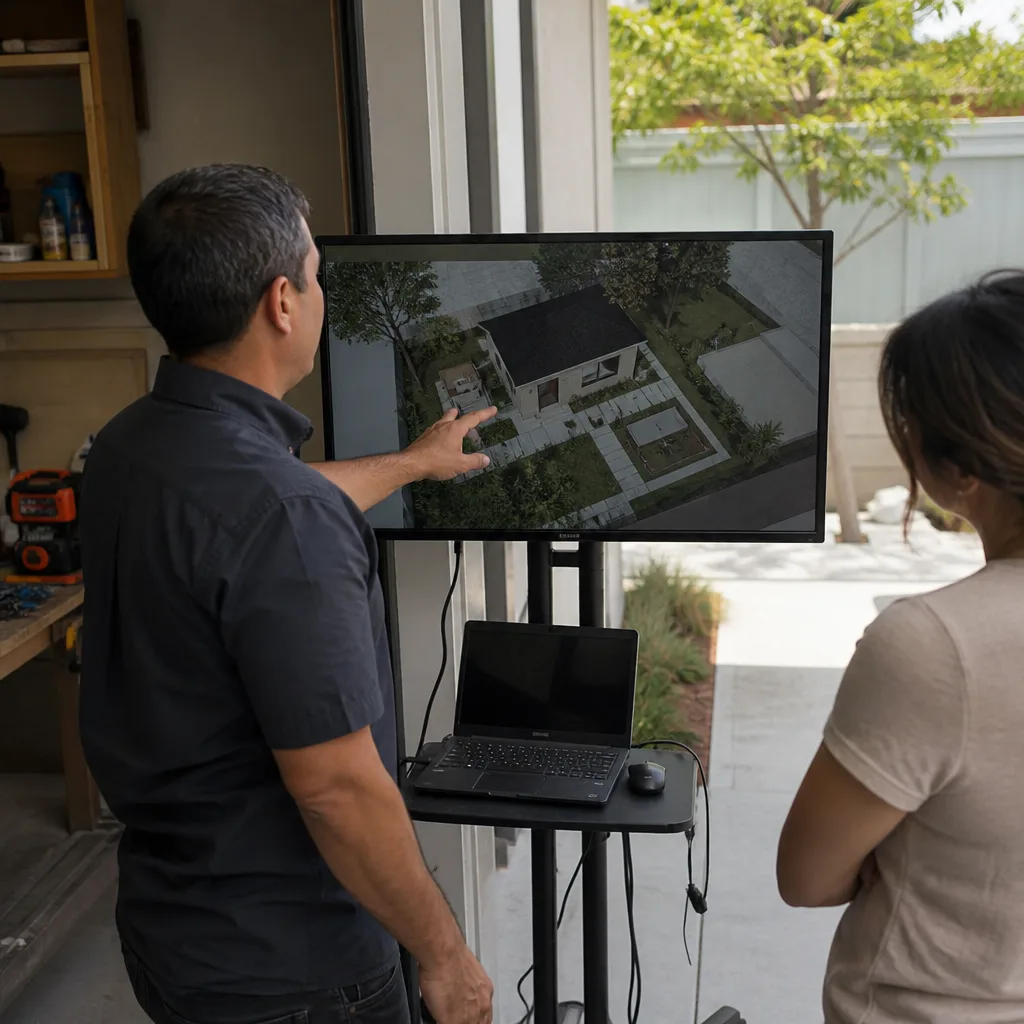
Every permitted ADU in Irvine receives a final inspection card, either physical or digital through the city’s online portal. Homeowners rarely read these cards closely. The language variations are subtle, but the legal implications differ substantially.
“Approved” (plain language): All inspections passed. The project meets code as drawn. The city has no outstanding requirements. This is the status you want.
“Approved as Noted” or “Approved with Corrections”: The inspector passed the project but documented specific conditions, deviations, or required follow-up. These notes are binding. They travel with the property record and can resurface during a sale.
Common notes we see on Irvine final cards include:
- “Final approved; driveway width per plan; landscape irrigation to be completed per approved landscape plan” - meaning landscaping was not inspected and remains an open item.
- “Approved as noted; fire sprinkler system deferred to final building; R-3 occupancy confirmed” - indicating a residential occupancy classification that may affect insurance rates.
- “Approved; retaining wall to remain as built; geotechnical report on file” - suggesting the wall was built to an as-built condition rather than the approved plan, with the geotechnical report serving as the justification.
The critical step: obtain the complete final card, not just the summary. In Irvine, the full card with inspector notes is available through the city’s online permit portal using your permit number. If you only have a physical sticker or a one-line email confirmation, you do not have the complete record.
We encountered a case in Northwood Pointe where a garage conversion carried an “Approved as Noted” status with the note: “Electrical subpanel location per field condition; verify with approved plan.” The homeowner sold the property four years later. The buyer’s inspector flagged the subpanel location as differing from the permitted plan. The note had justified the deviation, but the buyer’s lender required a formal letter of verification from the city. Six weeks, $800 in city fees, and a threatened escrow cancellation.
The Haven Standard, Clause 3 (Documented Closeout), requires that we deliver every client the complete final card, all inspector notes, and a written summary of any “as noted” conditions before we consider a project complete. Most homeowners do not know to ask for this until it is too late.
HOA Violation Warning Signs That Surface Retroactively
Irvine contains over 40 homeowners associations, many with architectural review committees that exercise authority over exterior modifications, setbacks, and even paint colors. A city permit does not override HOA covenants. An ADU can be fully code-compliant yet violate CC&Rs - and because HOA enforcement is complaint-driven, violations often surface years after construction, triggered by a neighbor dispute or a sale that puts eyes on the property.
These are the specific modification types that trigger retroactive architectural review:
- Roofline changes visible from the street. Many Irvine HOAs, including those in Turtle Rock and Quail Hill, require that additions maintain the original roof pitch and material. A flat-roofed modern ADU added behind a pitched-roof traditional home may comply with city setback rules yet violate the HOA’s design guidelines.
- Secondary structures exceeding height limits in CC&Rs. City code allows detached ADUs up to 16 feet in height (18 feet with specific roof styles). Some Irvine HOAs cap accessory structures at 12 feet. The city permit does not check this.
- Hardscape expansion beyond approved ratios. Converting a garage to an ADU often requires replacing the driveway approach or adding a walkway. HOAs in Orchard Hills and Great Park neighborhoods enforce maximum impermeable surface ratios. The city does not measure your total hardscape against HOA limits.
- Utility meter relocation or additional service points. A separate electric meter for an ADU, required by California law for some rental scenarios, may violate HOA rules about visible equipment. We have seen cases where the meter location, approved by the city and utility, triggered a $2,500 HOA fine and a relocation order.
The warning sign to watch for: any condition where your city permit shows approval but your original HOA application (if one was filed) contains a different drawing or description. Discrepancies between the two sets of documents are litigation bait for HOA boards.
Before building, request the complete CC&R architectural section and compare it against your permitted plans, line by line. After building, retain the HOA approval letter in your permanent file. Not all HOAs issue formal approval letters; if yours does not, request written confirmation that the project was reviewed and found compliant. Email suffices if it comes from the architectural committee chair or property manager.
At Garage Conversion ADU in Irvine, we coordinate HOA submission concurrently with city permitting for clients in governed communities. The two-track process adds 2-4 weeks but eliminates the retroactive risk.
Structural Warning Signs in Irvine’s Clay-Heavy Soil Conditions
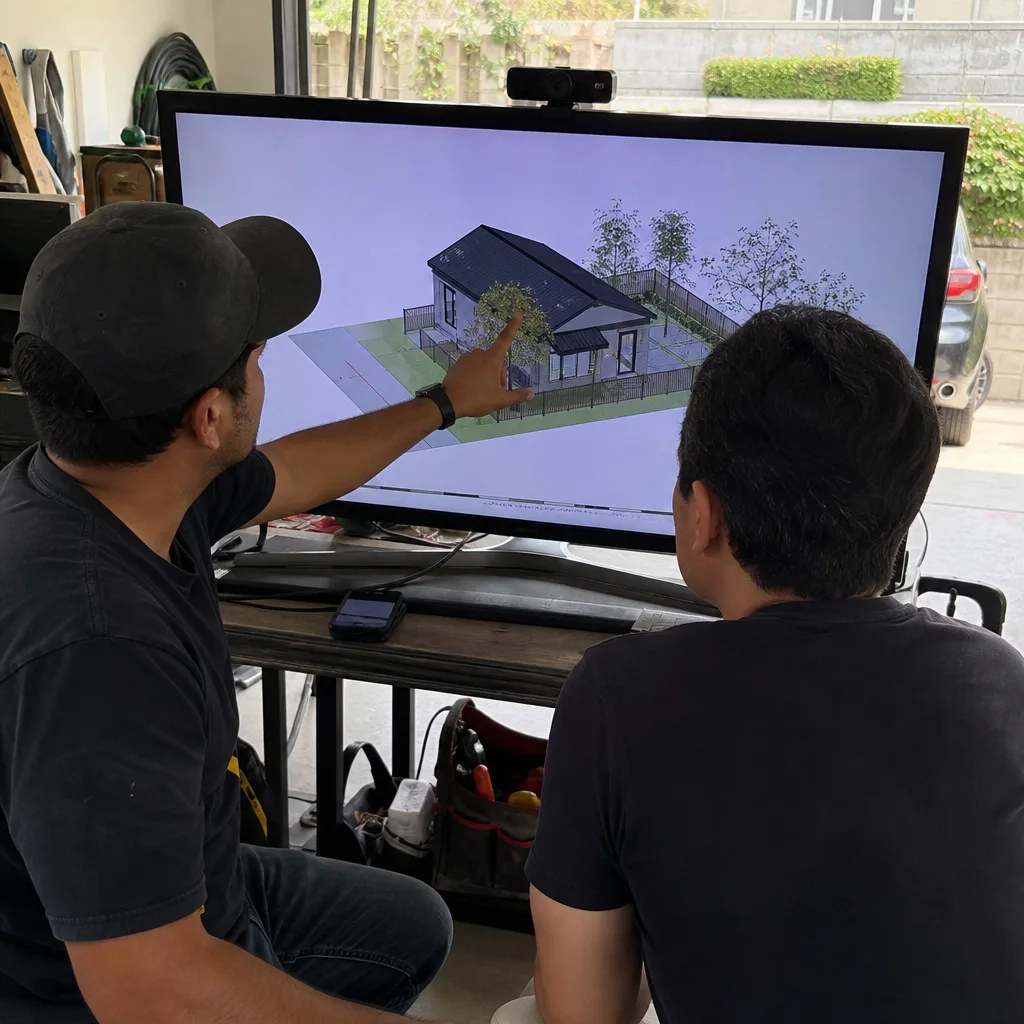
Irvine sits on the Irvine Formation, a geological layer of marine sediment that includes expansive clay soils. These clays shrink and swell with moisture changes, creating seasonal foundation movement that differs from the sandy or rocky conditions in coastal Orange County. Detached ADUs, with their smaller footprints and lighter structural loads, are particularly susceptible to differential settlement.
Watch for these specific conditions:
Door binding that follows a seasonal pattern. A door that sticks in October and frees up in April is responding to soil moisture cycles, not humidity. In detached ADUs, this often indicates inadequate foundation depth or missing expansion joints between the ADU slab and any connecting walkway or patio. The fix is not planing the door; it is addressing the foundation movement.
Hairline stucco cracks at exterior corners and window openings. Small cracks (under 1/16 inch) that run diagonally from corners are typical settling. Cracks that widen seasonally, or that appear on both interior and exterior surfaces at the same location, suggest structural movement. In Irvine’s clay soils, we see this most often on New Detached ADU in Irvine projects where the geotechnical report recommended pier foundations but the builder used a slab-on-grade to cut costs.
Efflorescence patterns on stem walls or slab edges. The white, powdery deposits indicate moisture wicking through concrete. In clay soils, this often means the foundation lacks proper drainage or a vapor barrier. Left unaddressed, it degrades the slab edge and can wick into wall framing. The pattern to worry about: efflorescence that appears after rain and persists for weeks, suggesting hydrostatic pressure rather than surface moisture.
Slab-to-stem-wall separation. A visible gap between the floor slab and the vertical foundation wall, even a thin one, allows pest entry and moisture intrusion. In Irvine’s termite-prone climate, this is both a structural and pest control issue.
These conditions do not mean your ADU is failing. They mean the foundation system and the soil are not in equilibrium, and the gap will widen. Early intervention - typically a structural engineer’s assessment and targeted drainage or underpinning - runs $3,000-$8,000. Deferred intervention, after wall framing or stucco is compromised, can exceed $25,000.
We specify pier-and-grade-beam foundations for most detached ADUs in Irvine’s clay zones, with engineered drainage plans that account for the site’s specific soil report. The upfront cost is 8-12% higher than slab-on-grade. The avoidance of seasonal movement repairs typically returns that investment within the first five years.
The Three Document Absences That Predict a Difficult Sale
When an Irvine homeowner sells a property with an ADU, the buyer’s due diligence process examines three document categories that many sellers have never assembled. Their absence does not prevent a sale, but it introduces contingencies, price reductions, and timeline extensions that favor the buyer.
1. Recorded Notice of Completion
California Civil Code requires that a Notice of Completion be recorded within 10 days of project acceptance to start the clock on mechanics lien exposure. More critically for sellers, the recorded NOC is the document that title companies use to verify that all subcontractors were paid and no liens were filed.
Without a recorded NOC, a prudent buyer’s agent will demand a title insurance endorsement or a holdback of 1-2% of sale price for 90 days. In a $1.5 million Irvine sale, that is $15,000-$30,000 in escrow limbo.
To verify: search your property on the Orange County Recorder’s website. The NOC should appear as a recorded document within 30 days of your final inspection date. If it is missing, your contractor may have filed it with the city but never recorded it, or may have skipped the step entirely.
2. Utility Service Agreement for Separate Metering
ADUs intended for rental require separate utility metering under California Health and Safety Code 17958.11. The service agreement between the homeowner and the utility (Southern California Edison for electric, SoCalGas for gas) documents that the ADU has independent service, not a submeter or split-bill arrangement.
Buyers’ lenders increasingly require this documentation for rental ADUs because it affects the unit’s legal compliance as a separate dwelling. Without it, the buyer may be unable to obtain conventional financing and must use a portfolio loan at higher rates.
The warning sign: your ADU has a separate electric panel but the utility bill still comes as one account for the entire property. Call SCE at(657) 233-9738 and request your service point documentation.
3. HOA Approval Letter or Covenant Waiver
As discussed above, this document is not required by the city but is essential for properties in governed communities. Its absence does not invalidate the ADU, but it exposes the seller to post-sale HOA action that the buyer will price into their offer.
In competitive Irvine sales, we have seen buyers’ agents use missing HOA documentation to justify $10,000-$25,000 price reductions, even when no actual violation exists. The uncertainty itself has value in negotiation.
Under Haven Standard Clause 7 (Transfer-Ready Documentation), we compile these three documents, plus the complete permit set and final inspection record, into a project closeout binder that accompanies the property record. Most of our clients do not think about resale when they are building; we do, because the documents are perishable and harder to reconstruct years later.
Prefab and Modular ADU-Specific Warning Signs
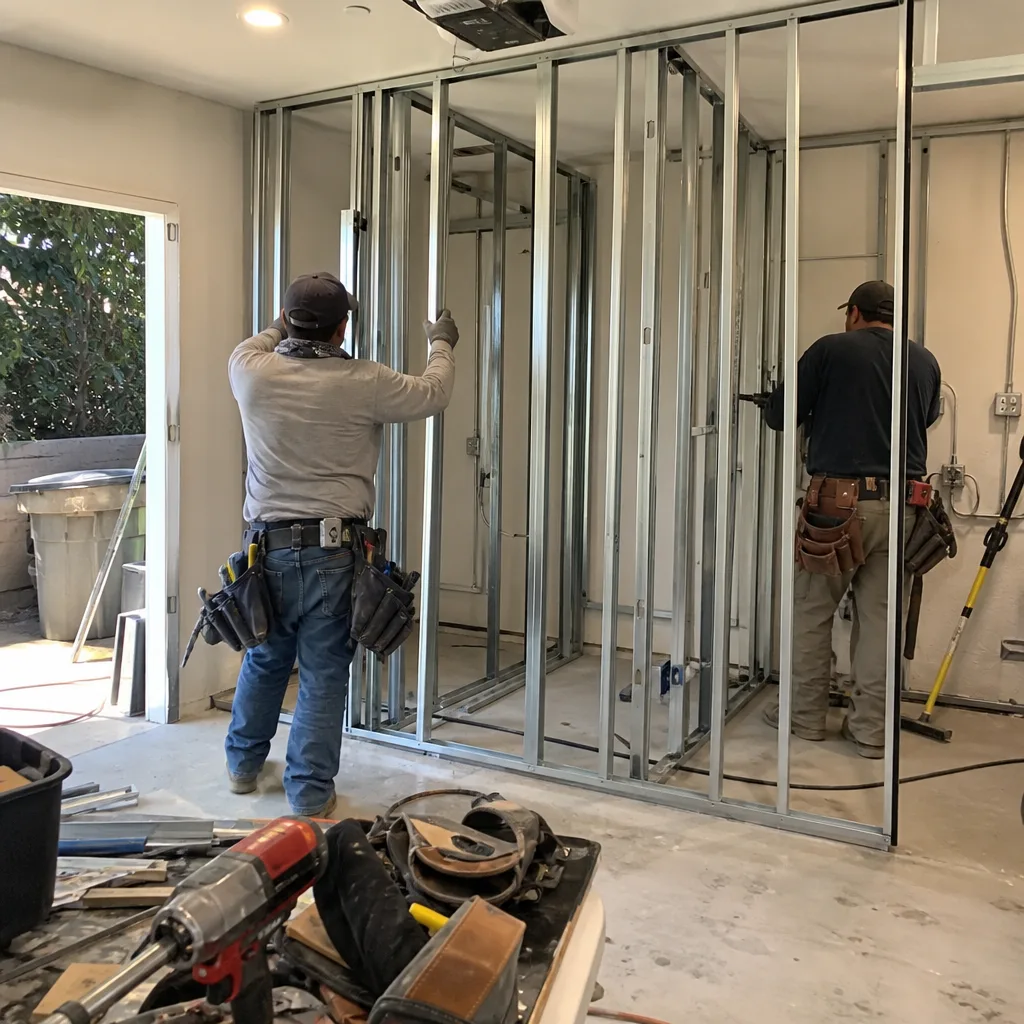
Prefab and modular ADUs - systems from brands like Abodu, Cover, and Dvele - introduce documentation and coordination risks distinct from stick-built construction. These units are manufactured off-site, transported, and craned into position. The warning signs relate to the gap between factory certification and local jurisdiction acceptance.
Factory certification without local HUD or state modular approval. Some prefab units carry a factory quality certification that is not equivalent to the California Department of Housing and Community Development’s modular approval or the city’s site-specific inspection. In Irvine, the Building Division requires a “local combination inspection” that covers foundation, utility connection, and fire separation. A factory sticker alone does not satisfy this. Verify that your permit file contains both the factory certification and the city’s local inspection sign-off.
Transport damage to weatherproofing envelope. Modular units shipped by flatbed can sustain sealant and flashing damage that is not visible until the first heavy rain. In Irvine’s Mediterranean climate, the first significant rain event may not occur for 6-8 months after installation. Inspect the roof-to-wall junctions, window flanges, and any penetrations after the first two rain events. Water staining on interior drywall at these locations indicates transport-compromised seals, not design failure.
Craning clearance and setback documentation. Prefab delivery requires temporary crane positioning that may encroach on setbacks or utility easements. Some Irvine properties, particularly in the older neighborhoods north of the 405, have narrow side yards that require street closure permits for crane setup. If your prefab installation required a street closure, the permit for that temporary encroachment should be in your file. Its absence suggests the crane operation was unpermitted, which creates liability exposure if any property damage occurred.
Foundation mismatch with factory specifications. Prefab units require levelness tolerances (typically 1/4 inch over 10 feet) that exceed standard residential foundation specs. We have seen cases where a general contractor poured a conventional slab, the modular installer set the unit, and the resulting stress cracked factory-installed tile and trim within the first year. The factory warranty excludes this damage because the foundation did not meet their spec. The warning sign: your prefab installation contract does not include a pre-set foundation survey by a licensed surveyor or the installer’s technician.
At Ellery ADU Studio Irvine, we specify and coordinate prefab systems from Abodu, Cover, Dvele, Mighty Buildings, and other manufacturers within our single-contract design-build model. The factory coordination, foundation specification, and local inspection management are our responsibility, not the homeowner’s. This eliminates the designer-builder-factory blame gap that derails many prefab projects.
Common Mistakes to Avoid
- Treating city final inspection as project completion. Final inspection is a regulatory milestone, not a documentation milestone. The assessor update, utility agreements, and HOA notifications remain. Budget 4-6 weeks post-inspection for proper closeout.
- Accepting verbal assurance that “the HOA is fine with it.” In Irvine’s governed communities, verbal approval has no standing with architectural review committees. Demand written confirmation, and retain it with your permanent records.
- Ignoring seasonal door binding as “normal settling.” In clay soils, seasonal movement is predictable but not benign. It indicates a foundation system working at capacity. Address drainage and expansion joints before cracks propagate to structural elements.
- Assuming prefab factory warranty covers installation defects. Factory warranties cover manufacturing defects, not site conditions, foundation mismatches, or transport damage. Read the warranty exclusions before signing.
- Discarding permit documents after move-in. Lenders and buyers require these documents 5-15 years later. Scan everything to cloud storage, including the full permit set, all inspection cards, and all contractor correspondence.
- Neglecting to verify separate utility billing before first tenant move-in. Retroactive utility separation in Irvine requires SCE inspection and possible panel relocation. Address this during construction, not after a tenant disputes the arrangement.
When to Call a Professional
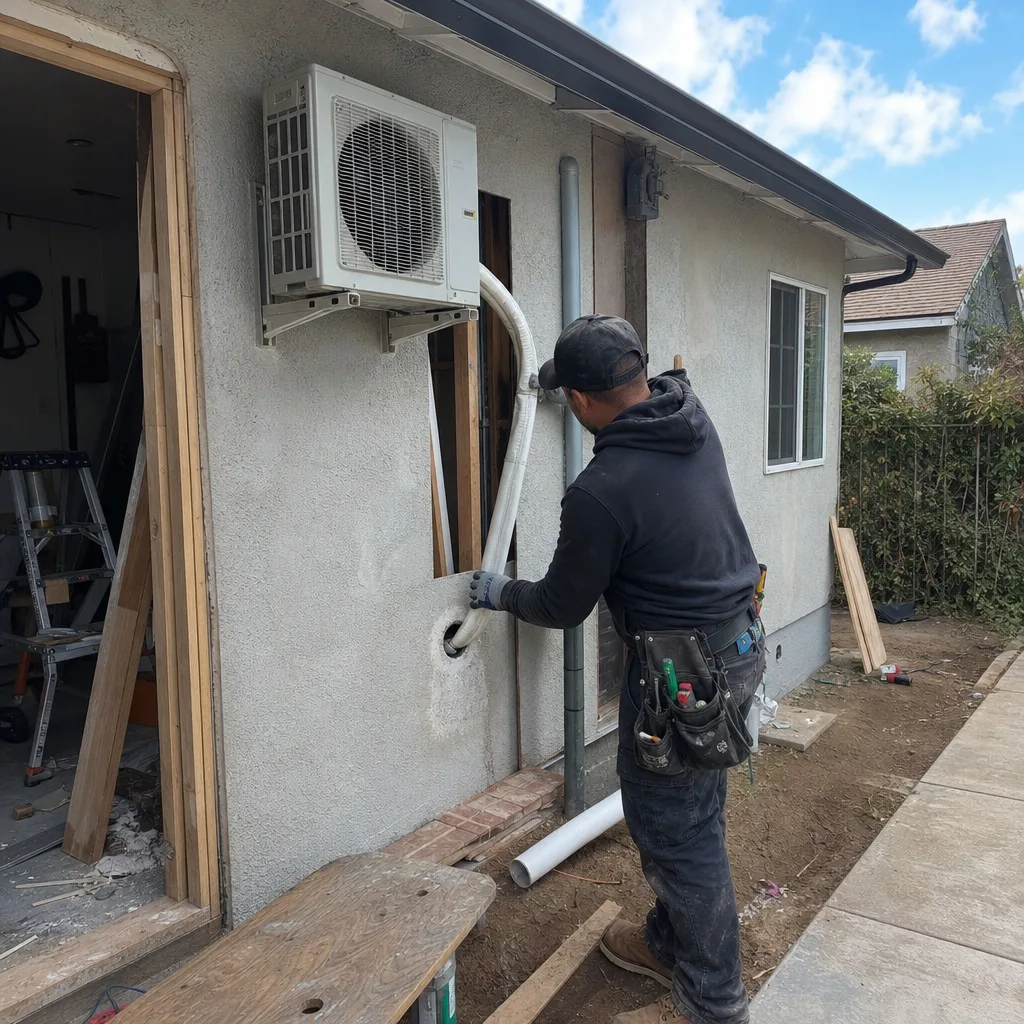
Call a design-build studio when you cannot verify your ADU’s documentation status, when structural warning signs are progressing, or when you are preparing to sell or refinance and discover gaps - see How to Hire a ADU Contractor in Irvine: A Step-by-Step Guide for what to look for. The cost of professional documentation recovery is typically $1,500-$4,000; the cost of a delayed or renegotiated sale is an order of magnitude higher.
Ellery ADU Studio Irvine offers free estimates in Irvine - call (657) 233-9738. We also provide a Free Second Opinion on any written estimate already in hand, and we answer calls with a live person 24/7. If your ADU documentation is incomplete, we can assess what is missing and what it will take to make the record whole.
Frequently Asked Questions
The administrative correction typically costs $800-$1,500 in county and city fees, plus 6-10 weeks of processing time. If the error requires supplemental inspection or plan verification, costs can reach $3,000. Call (657) 233-9738 for an exact quote on your situation - estimates are free.
Yes, but the sale may require additional documentation. Buyers’ lenders often require a letter from the city explaining the notes, which takes 2-4 weeks and costs $200-$400 in city research fees. The delay can cost leverage in negotiation. We recommend resolving “as noted” conditions before listing.
Roofline and height conflicts are most common, particularly in communities with strict design guidelines like Turtle Rock and Woodbridge. A flat-roofed modern ADU behind a traditional pitched-roof home often violates CC&R aesthetic rules even when it meets city code. Always obtain written HOA architectural approval before construction begins.
Check your permit file for a geotechnical report and foundation detail drawing. Adequate foundations in clay soils typically specify pier-and-grade-beam construction or a thickened slab with engineered drainage. If your file shows only a standard 4-inch slab with no soil report, consult a structural engineer. Seasonal door binding and corner stucco cracks are physical warning signs that the foundation is underperforming.
Yes. Factory certification does not replace city inspection in Irvine. The Building Division requires local combination inspection for foundation, utility connection, and fire separation. Verify that your permit file contains both factory documentation and city sign-off. Missing local inspection is a common prefab gap.
Under Haven Standard Clause 1, every project is quoted with a written price before any work begins. The scope is locked at signing; no door-side upsells, no scope creep. This applies to documentation recovery, structural assessment, and any remediation work we undertake. Call (657) 233-9738 to schedule your free estimate.
The Bottom Line
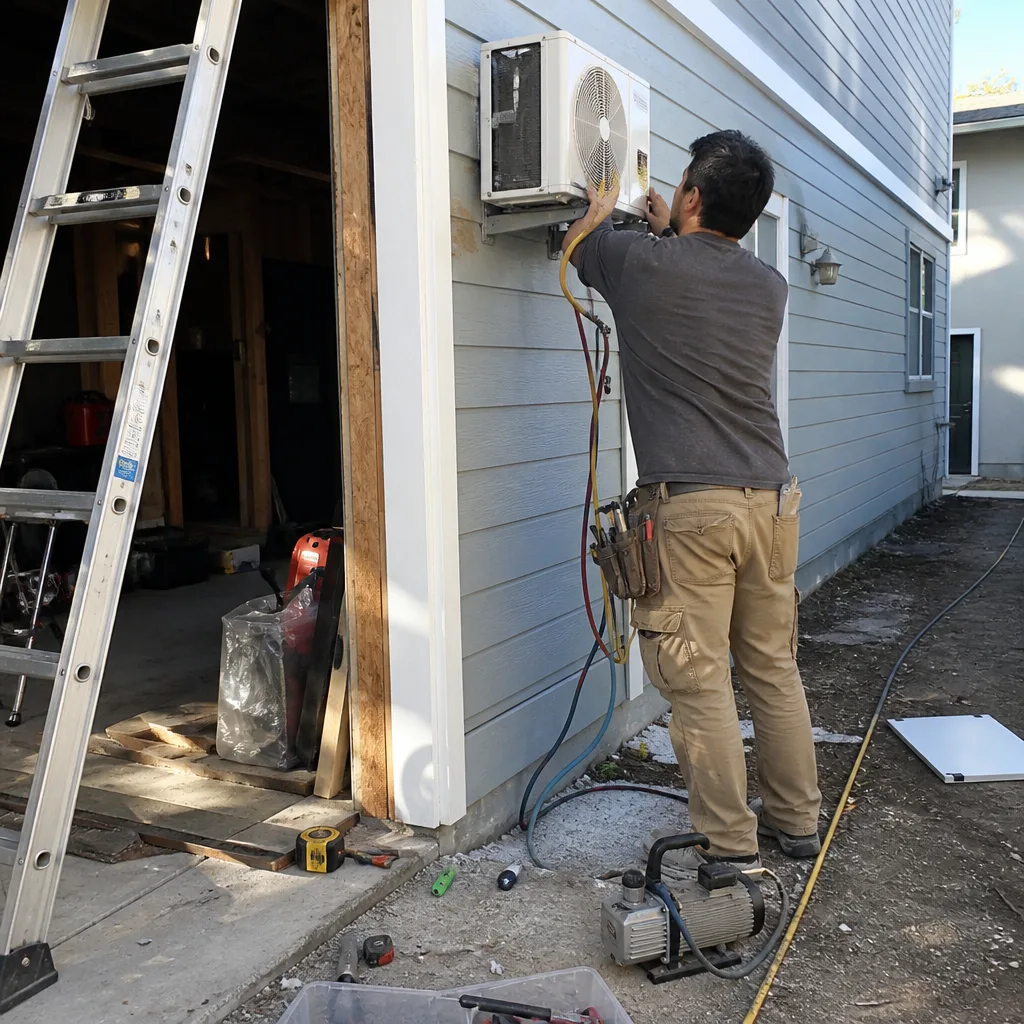
The most expensive ADU problems in Irvine are not dramatic structural failures. They are quiet documentation gaps that surface at the worst possible moment: a sale, a refinance, or an insurance claim. The warning signs are readable in free public records and observable conditions if you know where to look. Check your assessor record for ADU presence and square footage accuracy. Read your permit final card for “approved as noted” language and binding inspector conditions. Verify your HOA approval letter, utility service agreement, and recorded Notice of Completion before you need them. Watch for seasonal door binding, progressive stucco cracks, and efflorescence on detached units in clay soil zones. These steps cost nothing and can prevent five-figure surprises.
At Ellery ADU Studio Irvine home, we have designed, permitted, and built over 900 ADUs since 2015. Every project carries a written price before work starts, a documented photo record on every visit, and a 365-Day Done Right Promise backed in writing. If you are unsure about your ADU’s documentation status or have observed warning signs you cannot interpret, call (657) 233-9738 to schedule your free estimate.
Written by Nadia Ellery, Owner at Ellery ADU Studio Irvine, serving Irvine since 2015.